Innovating Product Design at Microsoft
Purpose/Objective: Innovate product design and support company/C-level initiatives with an unprecedented combination of UX, HCI, and neuroscientific expertise, approaches and related technologies.
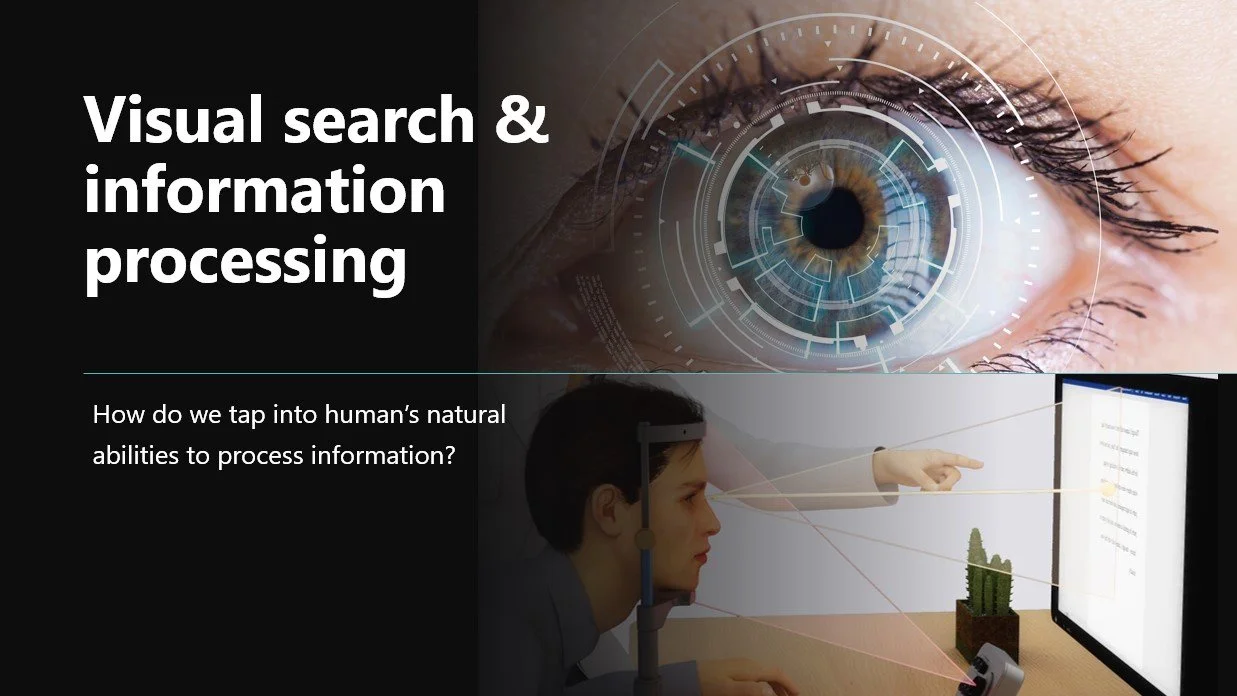
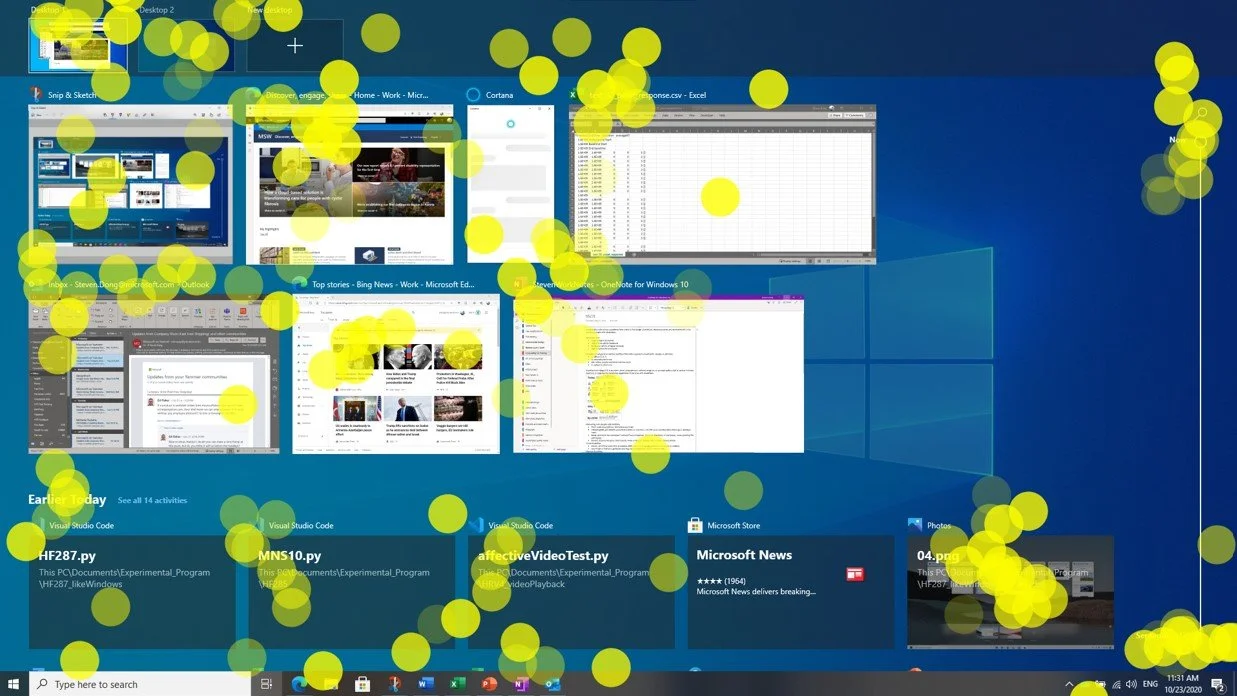
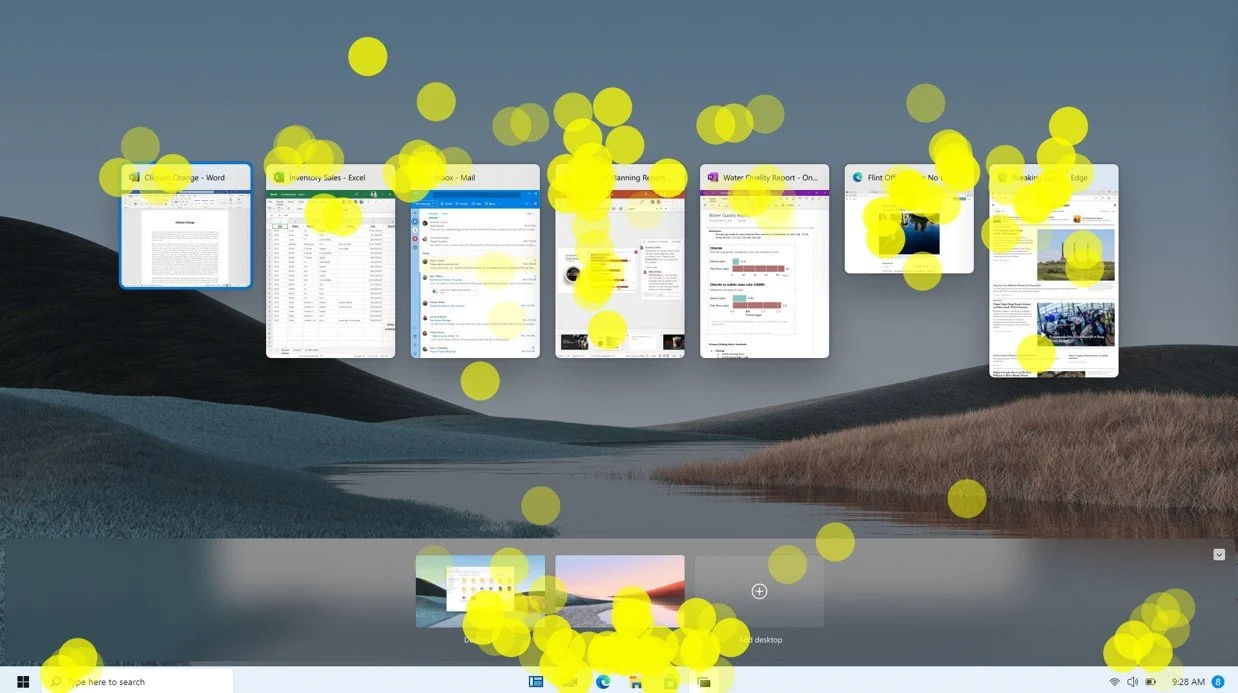
Goal(s): Unlock objective data collection opportunities by using neuroscientific technologies, including Eye Tracking, EEG, fNIRS, and fMRI; Create advanced opportunities to inform product design and special company/C-level initiatives, such as measuring human emotional responses to product designs and experiences, using Eye Tracking to detect Deep Fake videos, Misinformation, and develop UI, and using EEG to measure mental effort/demand and fatigue levels associated with product interactions/experiences.
Role(s): I hired and managed a team of experts in UX, HCI, and neuroscience; I facilitated cross-company and executive collaborations, and identified opportunities to innovate our understanding of users within the complexities of the modern digital experience; I supervised research design and data analysis, and communications/rollouts from the team.
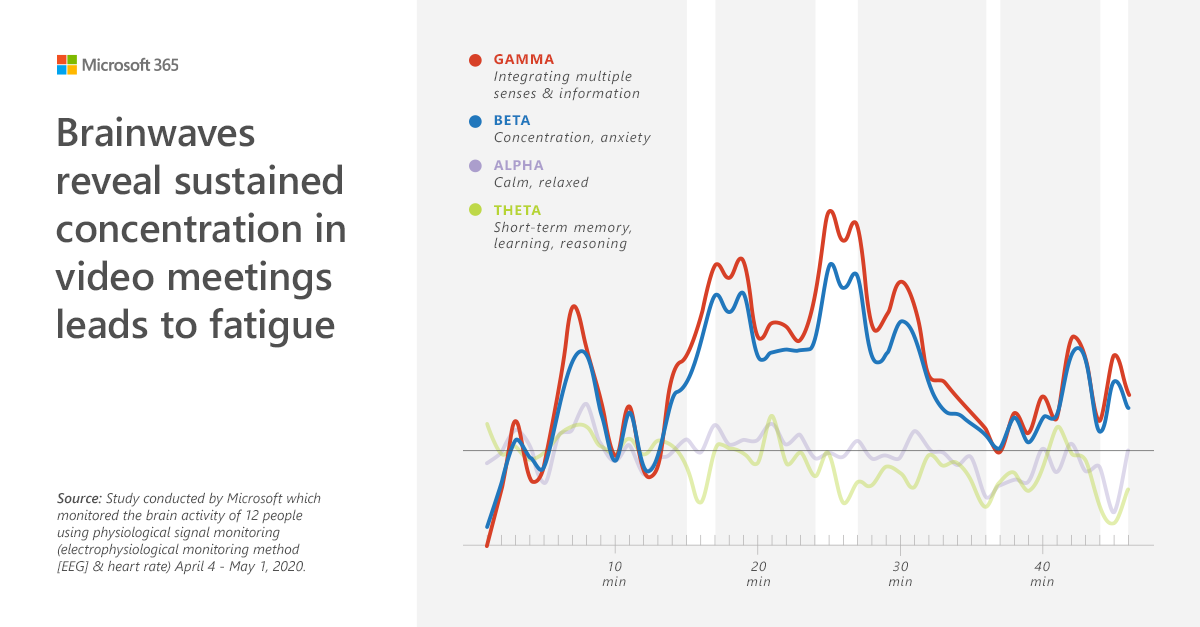
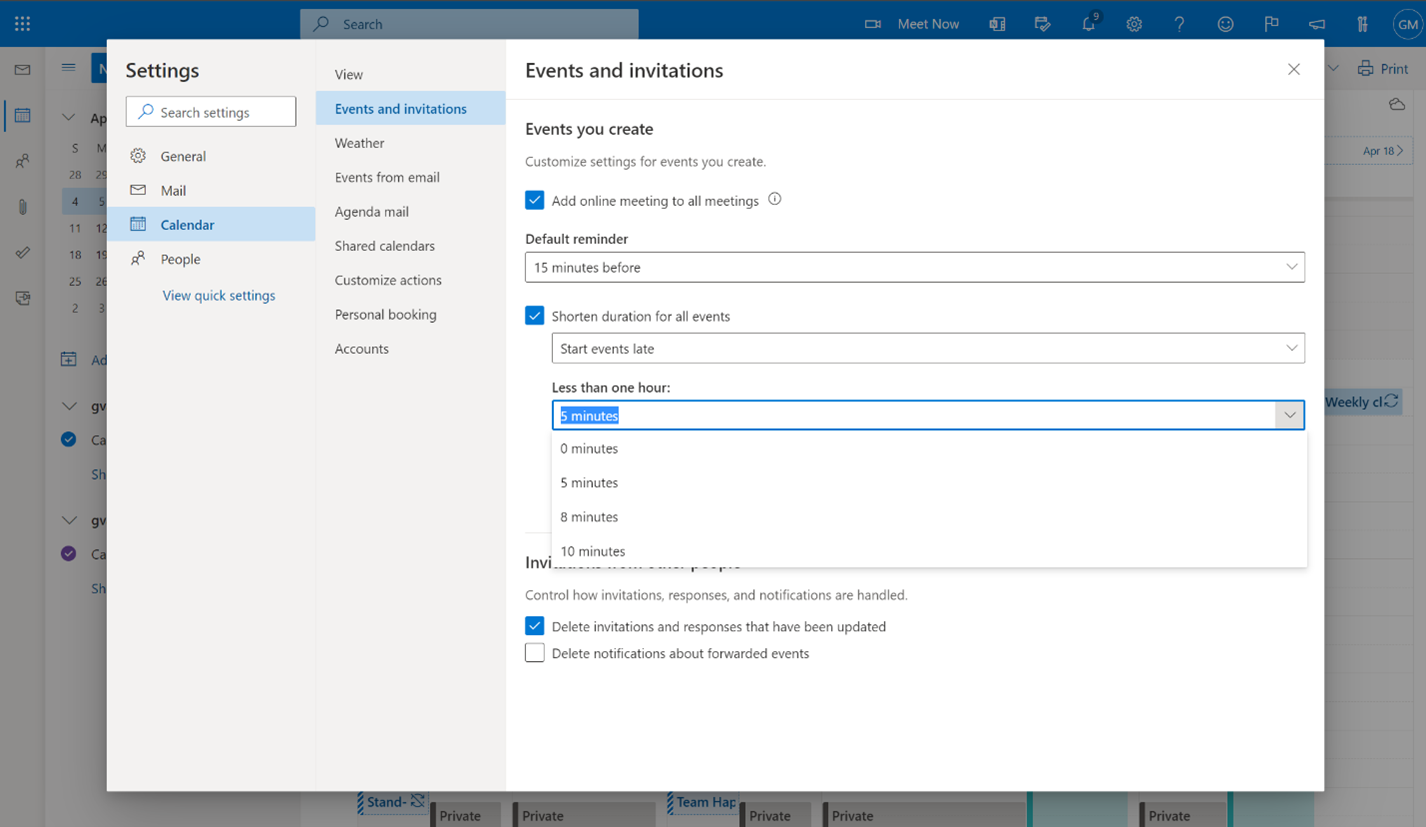
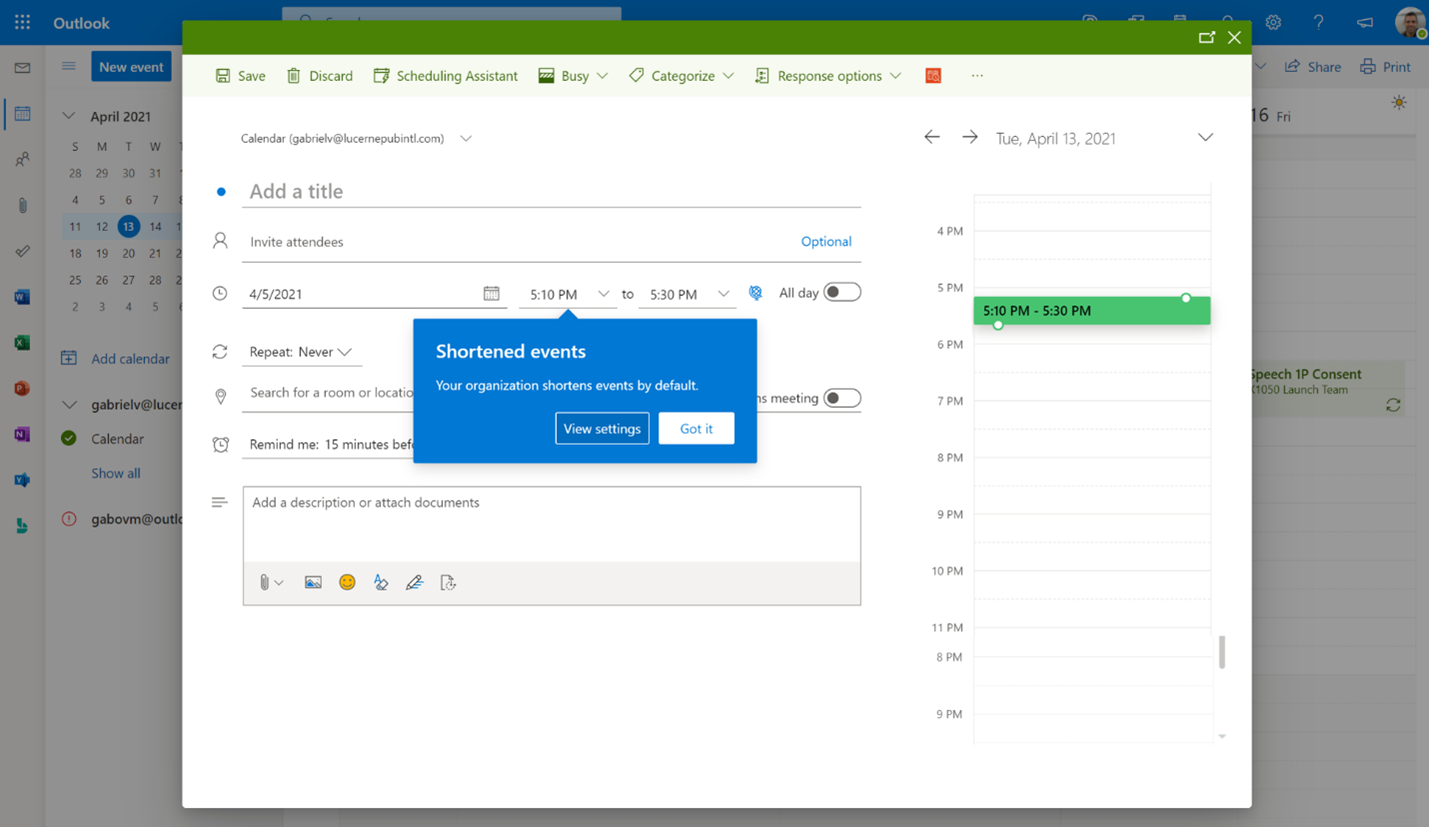
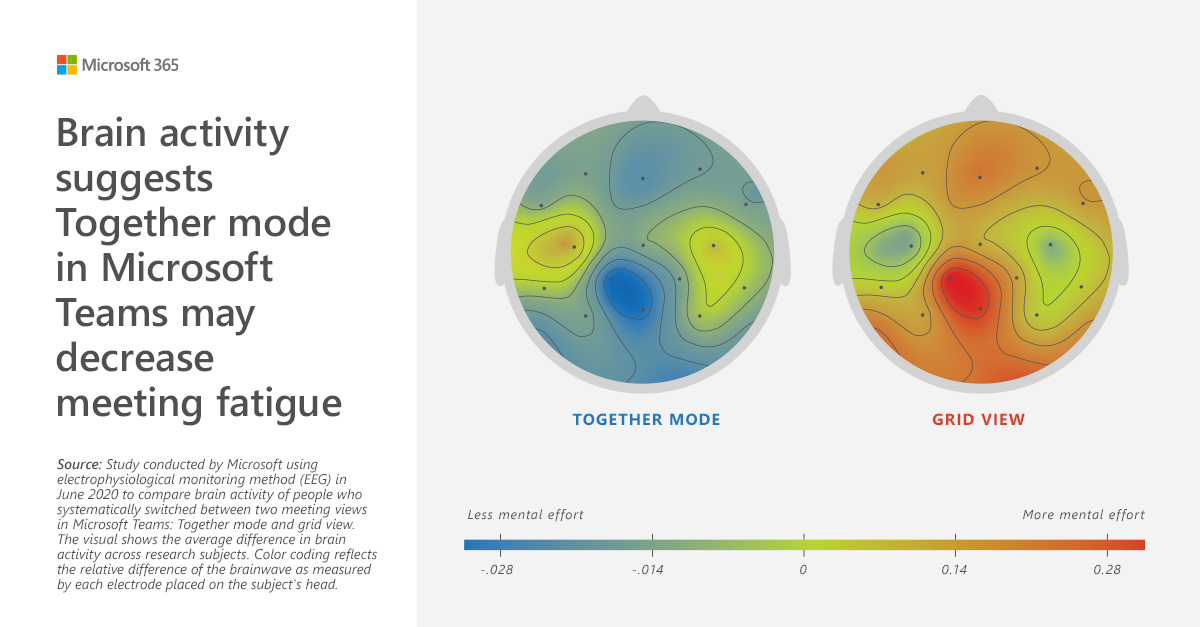
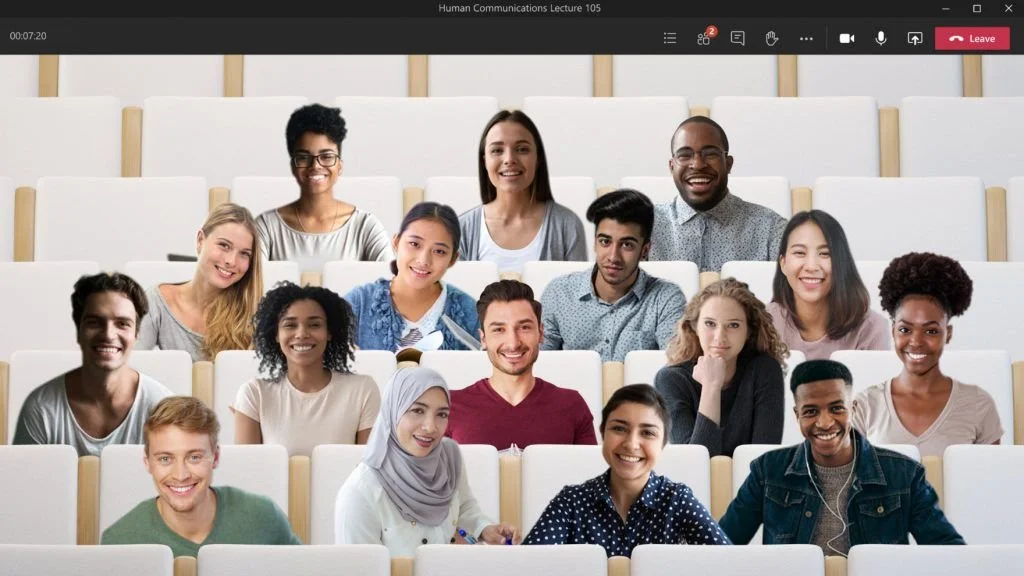
Outcome: I conceived a research program on the human cost of remote work, and a member of my team ran the studies. We found that back-to-back virtual meetings build up mental fatigue, and that short breaks between meetings reduce it. These findings informed Outlook’s option to automatically shorten meetings by 5–15 minutes. We also found that Teams Together mode significantly reduced mental workload. This work contributed to Microsoft being named #1 in Fast Company’s Most Innovative Companies in Data Science (2022).